Weather Patterns Shaping Layered Betting Strategies on Racetracks and Courts
Written by Ellis Zimmermann · Aug 18, 2026

Weather Patterns Shaping Layered Betting Strategies on Racetracks and Courts
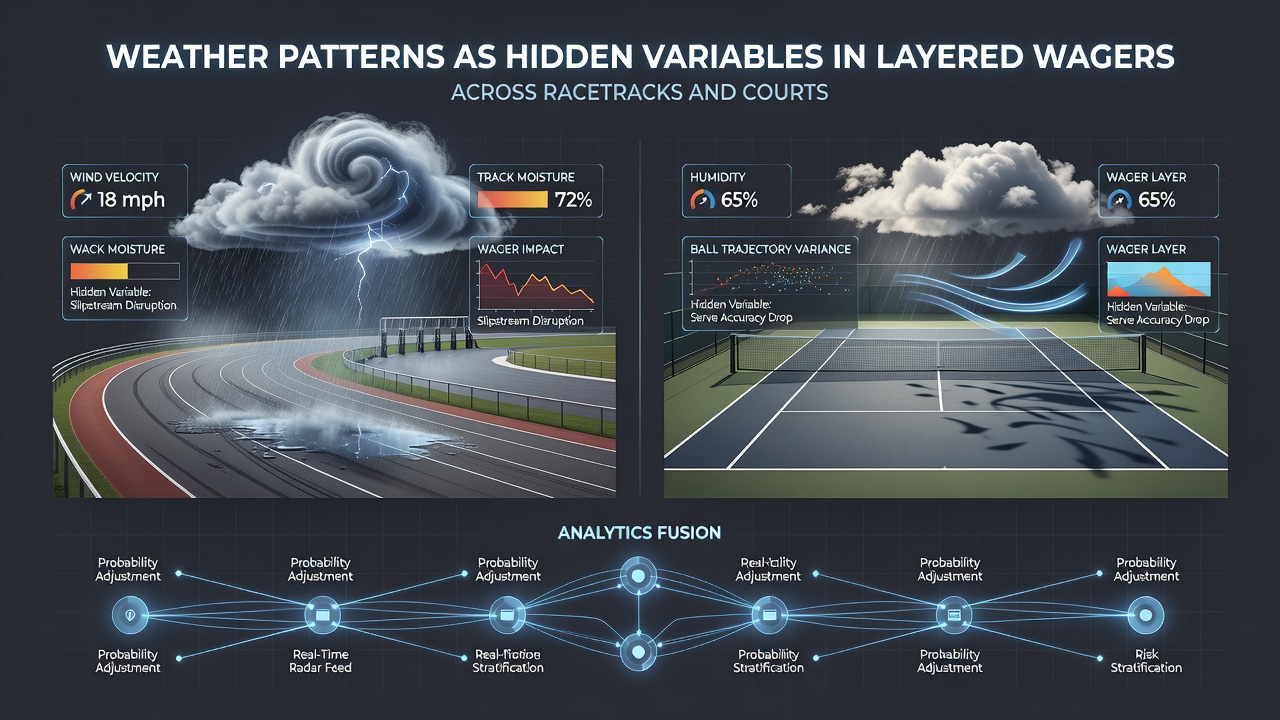
Weather patterns introduce measurable variables into betting models that span horse racing tracks and tennis courts, where layered wagers combine outcomes across multiple events, and atmospheric data from sources like the National Oceanic and Atmospheric Administration reveals consistent correlations between precipitation levels, wind speeds, and performance metrics in both sports.
Track surfaces respond directly to rainfall amounts, with turf courses shifting from firm to soft or heavy ratings that alter average winning times by several seconds per furlong according to industry performance records, while all-weather tracks maintain more stable conditions yet still experience drainage variations during prolonged wet periods in regions like the American Midwest.
Atmospheric Effects on Equine Performance Metrics
Horse racing analysts track how temperature swings influence stride efficiency and recovery rates, since equine physiology data from veterinary studies shows that elevated humidity combined with heat above 30 degrees Celsius reduces stamina in longer races, prompting adjustments in layered accumulator structures that pair selections from different meetings on the same day.
Wind direction and gust strength further modify outcomes at exposed venues, where headwinds on straight sections can add fractions of a second to final times, and data from meteorological services in Australia demonstrates these effects compound across multi-leg bets when bettors overlook localized forecasts issued by the Bureau of Meteorology.
Variables Introduced on Tennis Surfaces
Tennis court play incorporates parallel weather dependencies, as clay courts absorb moisture that slows ball speed and increases rally durations, whereas grass and hard courts exhibit quicker changes under direct sunlight or sudden showers that affect serve percentages and error rates tracked in professional match statistics.
Wind patterns disrupt serve trajectories and lob consistency during outdoor tournaments, with research from academic papers on sports aerodynamics indicating that crosswinds exceeding 15 kilometers per hour correlate with higher unforced error counts, a factor integrated into predictive models for combined horse racing and tennis accumulator wagers.
Integration Into Multi-Event Wagering Frameworks
Bettors constructing layered wagers across racetracks and courts incorporate real-time weather feeds to refine probability estimates, since historical datasets from the Jockey Club in the United States document how pre-race rain delays shift favorite success rates on turf by up to 12 percent compared to dry conditions, while similar adjustments apply to tennis set outcomes under varying humidity.
Seasonal patterns in August 2026 highlight these interactions at peak summer events, where afternoon thunderstorms in European venues and North American tracks create narrow windows for accurate forecasting that influence the sequencing of selections in daily accumulator chains spanning both disciplines.
Observers note that regulatory frameworks in multiple jurisdictions require operators to disclose environmental factors in promotional materials, yet primary responsibility for incorporating such data remains with individual bettors who access open meteorological archives to cross-reference with form guides.
Data Sources and Analytical Approaches
Industry reports compiled by the European Gaming and Betting Association compile aggregated performance statistics that link weather events to payout distributions in multi-sport bets, revealing patterns where unaccounted precipitation leads to wider variance in returns across combined horse and tennis legs.
Academic examinations published in sports science journals further quantify these relationships through controlled analyses of past seasons, demonstrating that models incorporating wind and temperature inputs achieve higher calibration accuracy than those limited to historical form alone when applied to layered wager construction.
Conclusion
Weather patterns function as quantifiable inputs within betting ecosystems that connect racetracks and tennis courts through shared environmental sensitivities, with ongoing data collection from international meteorological and racing authorities supporting refined approaches to layered wager evaluation as seasonal conditions evolve through 2026 and beyond.